
16.07.2021 – 09:00
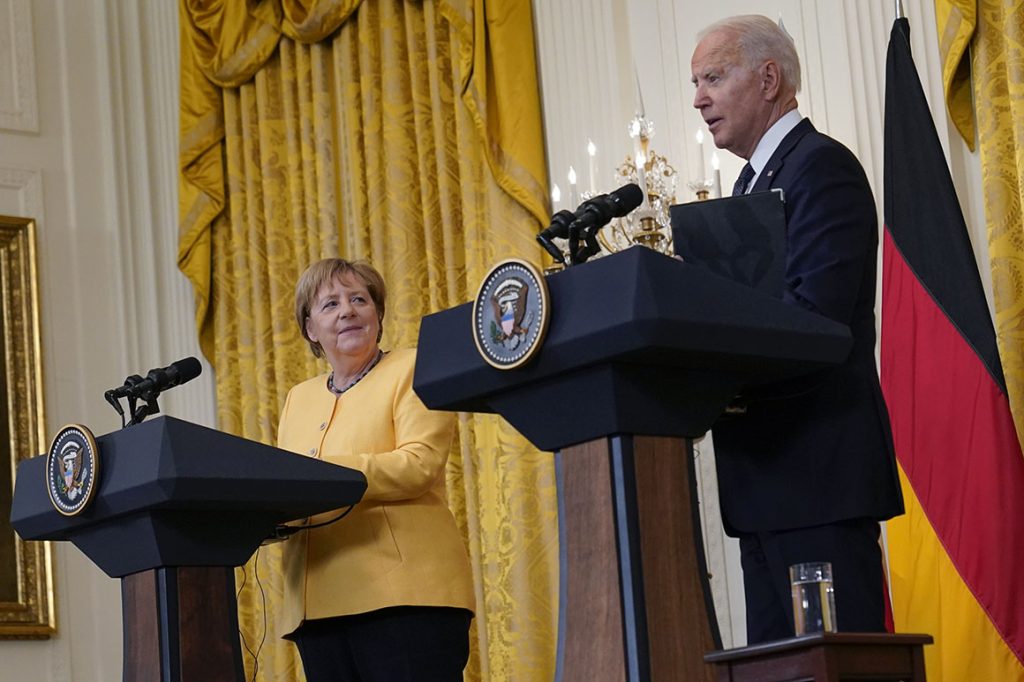
Welcoming Angela Merkel to the White House for the last time, President Joe Biden expressed his concerns to the German chancellor on Thursday about a near-completed Russia-Germany gas pipeline, but said they agreed that Russia should not allowed to use energy as a weapon.
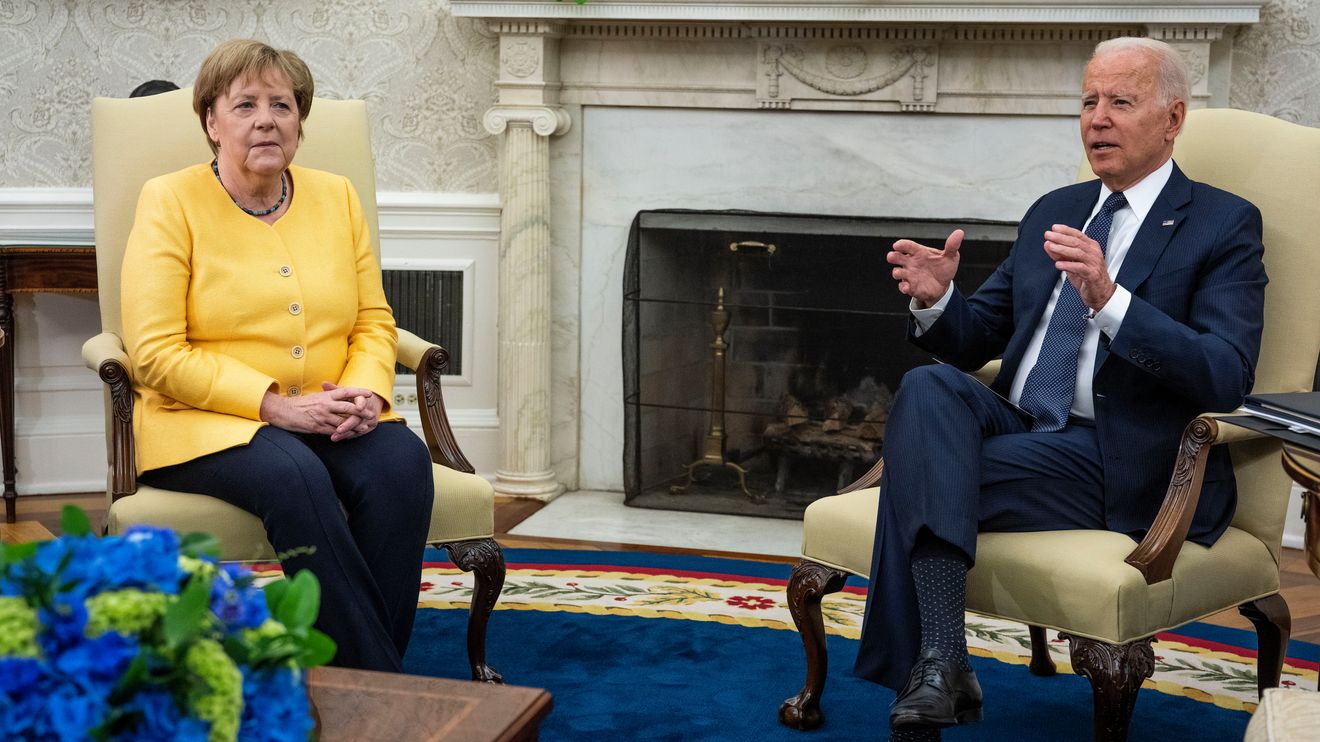
The two discussed – though made no tangible progress – changes to the Nord Stream 2 pipeline during a largely Merkel-friendly farewell visit to the end of a political career that has lasted four US presidencies.
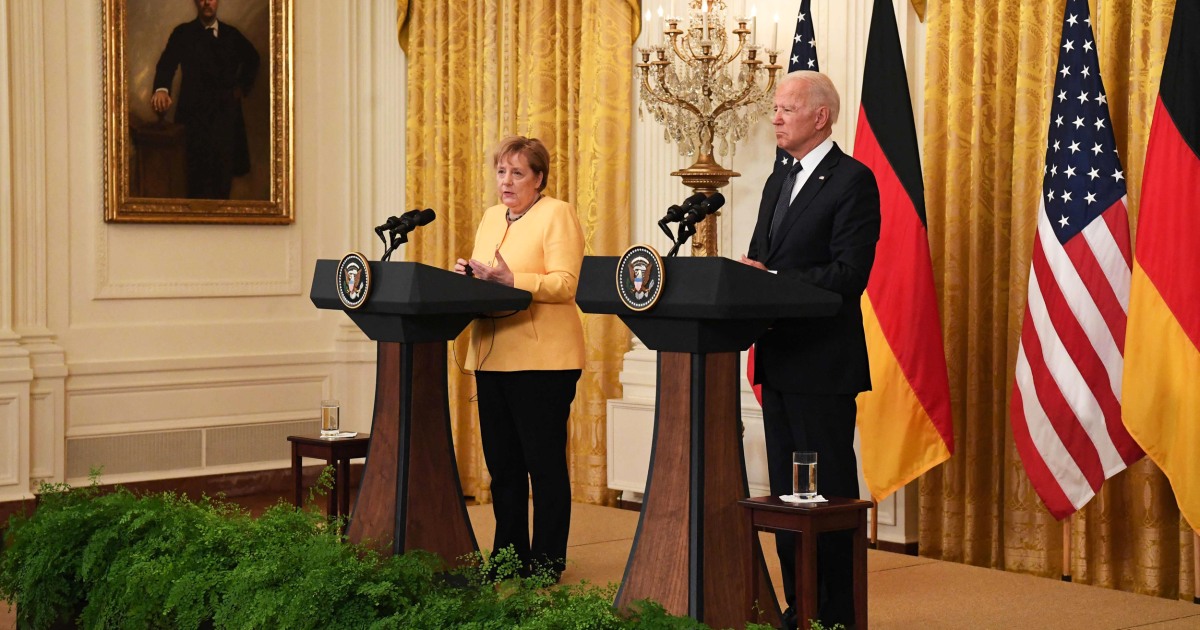
“On a personal note, I must say that I will miss seeing you at our summits,” Biden said as he stood next to Merkel, the second longest-serving chancellor in German history, at a House press conference. White late afternoon.
Merkel, who had a rather complicated relationship with former President Donald Trump, showed her familiarity with Biden, constantly referring to him as “Dear Joe”.
Asked to compare her relationship with Biden with her relationship with Trump, Merkel remained diplomatic, saying only that it was in the interest of every German chancellor to “work with every American president.” She added with a smile, “Today was a very friendly exchange.”
But despite their personal warmth, the US-Germany relationship is entering new territory as Merkel, who is not seeking another term in the September election, is close to ousting her.
There are concerns on both sides about how the two nations will negotiate growing disputes.
The United States has long argued that the Nord Stream 2 project would threaten European energy security by increasing the continent’s dependence on Russian gas and allowing Russia to exert political pressure on vulnerable Eastern and Central European countries, particularly Ukraine.
But Biden recently lifted sanctions against German units involved in the project, a move that angered Congress.
Merkel tried to minimize the changes and stress that the pipeline except – did not intend to relocate – Ukrainian pipelines.
“Our idea is and remains for Ukraine to remain a transit country for natural gas, for Ukraine, like any other country in the world, to have the right to territorial sovereignty,” Merkel said.
She added that Germany was ready to react to Moscow “if Russia does not respect this right of Ukraine that it has as a transit country.”
Merkel also raised concerns about COVID-19 travel restrictions barring most Europeans from traveling to the US.
Biden said he had brought the coronavirus at the head of his task force to discuss the issue and that he expected to be able to provide a more definitive answer “within the next seven days” about when restrictions could be eased.
Merkel started her day with a working breakfast with Vice President Kamala Harris and Harris’s office said the two had a “very honest discussion”.
Officials in Washington and elsewhere are wondering what direction Germany can take after the September vote.
Merkel’s Christian Democratic Union leads in the polls, but the center-left Greens and the center-left Social Democrats are also vying to lead a future government.
While the three sides differ in many policy areas, all are committed to a strong trans-Atlantic relationship.
Germany has strong trade ties with China, but has also been critical of Beijing’s human rights record.
Merkel is eager to avoid a situation in which Germany, or the European Union, may be forced to choose parties between China and the United States.
Merkel has insisted on the need to work with China on global issues such as climate change and the coronavirus pandemic, even though then-President Trump was accusing Beijing of launching that pandemic.
Still, Merkel stressed in her comments to reporters that she wants Germany and the European Union to coordinate their policy towards China with Washington, including issues such as labor rights, trade and cyber security.
“I believe that the foundations of our relationship with China should be based on the common values of the United States and Germany,” she said.
Translated and adapted by the Associated Press / konica.al