
08.07.2021 – 09:53
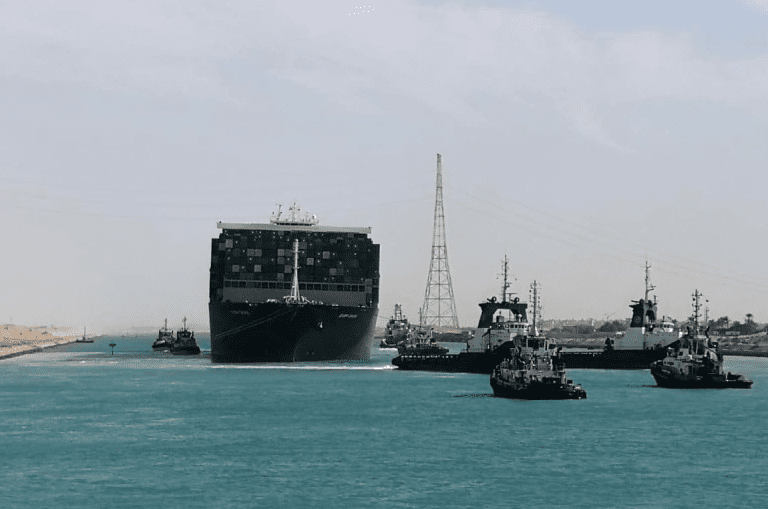
Ever Given, one of the world’s largest container vessels, resumed its voyage to leave the Suez Canal on Wednesday, 106 days after it sank into a southern section of the waterway for nearly a week and broke global trade.
The development came after its Japanese owner, Shoei Kisen Kaisha Ltd, reached an agreement with the channel authorities on a compensation amount after weeks of negotiations and a court blockade.
The settlement agreement was signed at a ceremony Wednesday in the town of Ismailia on the Suez Canal, after which the ship was seen sailing for the Mediterranean Sea.
Shoei Kisen said the ship would undergo a dive study in the Mediterranean city of Port Said, Egypt before resuming the voyage to the other port where its cargo will be unloaded.
The 400-meter (1,310-foot) ship is loaded with about 18,300 containers. The captain and another crew member were presented with a bouquet of flowers and a plaque aboard the ship.
“We regret the impact the travel delay has had on those with cargo stuck on board.” said Shoei Kisen in a statement.
“Throughout this issue, every effort has been made to minimize delays and to ensure the release of the ship as soon as possible.”
Wednesday’s release came a day after an Egyptian court lifted judicial seizure of the ship following the announcement by the Suez Canal Authority that a settlement had been reached with shipowners and insurers. Officials did not disclose details on the terms of the settlement. Initially, the Suez Canal Authority demanded $ 916 million in compensation, which was later reduced to $ 550 million. In addition to the money, local reports said the canal would also receive a tugboat.
The money, according to canal authorities, would cover the rescue operation, the costs of blocked canal traffic and lost transit fees for the six days Ever had caused by blocking the main waterway.
Extraordinary event
The Panamanian-flagged ship was en route to the Dutch port of Rotterdam on March 23 when it collided on the shore of a stretch with a canal lane about 6 km (3.7 miles) north of the southern entrance, near the city of Suez.
Its arch had touched the eastern wall of the canal, while its roughness seemed set against the western wall – an extraordinary event that experts said they had never heard happen in the canal’s 150-year history.
A massive rescue effort by a tidal-assisted flotilla of tugs liberated the skyscraper-sized ship six days later, ending the crisis and allowing hundreds of waiting ships to pass through the canal.
The blockade of the Suez Canal forced several ships at the time to take the long alternative route around the Cape of Good Hope on the southern tip of Africa, demanding additional fuel and other costs. Hundreds of other ships were waiting instead of closing the blockage.
The closure, which raised concerns of supply shortages and rising costs for consumers, added to the strain in the transport industry already under pressure from the coronavirus pandemic.
Translated and adapted for Konica.al by AlJazeera