
04.07.2021 – 07:59
The conflict in Afghanistan – America’s longest war – is coming to an end, or so President Joe Biden is expected to declare this week.
At the bottom, too, is the military involvement of Britain and NATO, dating back to the invasion that followed al Qaeda attacks in 2001 in the US.
But the conflict is not over.
Indeed, it is intensifying. What has changed is that the Western allies are, in fact, washing their hands.
Setting an unconditional U.S. withdrawal date on September 11 immediately after taking office.
Biden sparked an apparent military rift over the exit that has been joined by all the remaining NATO forces, including most of the UK troops.
July 4 is American Independence Day.
It can also be remembered as the day of the destruction of Afghanistan.
The official silence in Britain about this dilapidated, half-hidden retreat is deafening – in part for reasonable security reasons, but also out of political embarrassment.
Boris Johnson’s government, so dependent on Washington’s favor, must not openly criticize Biden.
But ministers and army chiefs surely know that his unilateral decision to leave, despite the absence of a peace agreement or even a general ceasefire, is irresponsible action.
The withdrawal has turned Afghanistan on the path of terror, mutilation and disintegration.
A catastrophe is happening.
General Austin Miller, commander of U.S. forces, warned last week that chaos had begun.
“Civil war is certainly a path that can be visualized if it continues on the trajectory in which it is. “This should worry the world,” he said.
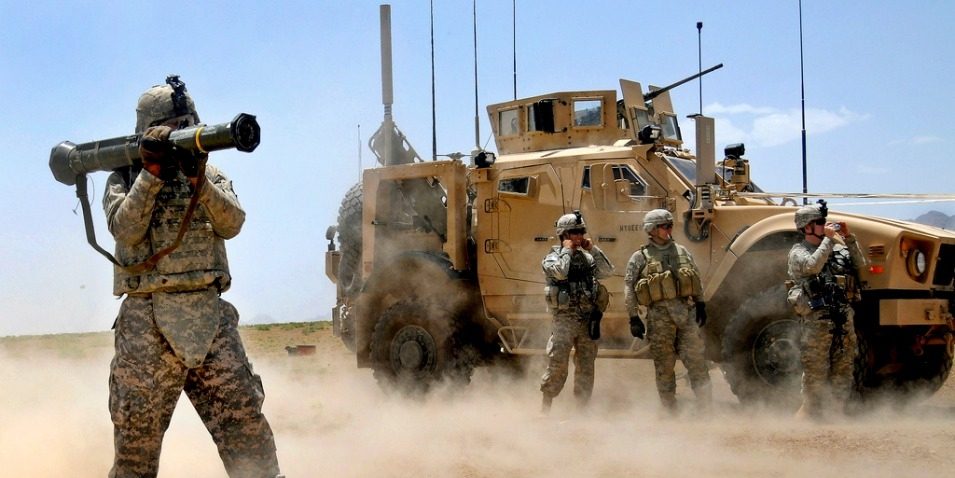
U.S. troops landed in Khost province, Afghanistan, in 2008. U.S. forces withdrew from Bagram on Friday.
Regional capitals, even Kabul, may be in the queue.
However, having no bases in neighboring countries, American aircraft and drones will be deployed with difficulty to secure a substantial and timely reserve.
Gen. Sir Nick Carter, the chief of staff, tactfully said it was not “a decision we had hoped for.”
After gathering on the American side in 2001, Biden’s failure to consult fully with the UK and NATO was particularly shocking.
To the Afghan people, the prospect of renewed anarchy is dire.
Recent limited gains – democratic governance, free expression and improved health care, education and civil and women’s rights – are all at stake.
Also, are the sacrifices of tens of thousands of civilians and soldiers, Afghans and foreigners, who died or saw their lives permanently damaged.
Apparently, it is unlikely, thankfully, that any Western leader would risk a similar game again.
Like Iraq, coldly abandoned to its fate 10 years ago, Afghanistan’s post-American future is bleak.
Translated and adapted by The Guardian / konica.al